


Examples of High-Performing Cybersecurity Ads
20 real campaigns and the strategies behind them
The cybersecurity industry continues to see astounding growth year over year. Thousands of companies are promoting their innovative products and services, looking to capture part of the massive marketplace. As long as cyber crime remains lucrative, the industry will continue to soar.
According to Cybersecurity Ventures, global spending on cybersecurity products and services will exceed $1 trillion cumulatively by 2031. It’s a crowded marketplace out there, to put it simply. But huge demand means huge reward for those companies that are able to effectively catch the eye of their target audience. This post highlights real-world cybersecurity advertising examples from B2B security brands and explains what makes each ad effective.
So what companies are nailing it with cybersecurity ads for their B2B solutions? Here we look at 20 of the best cyber security ads we’ve seen lately that are interesting, compelling, and strong examples of best practices in digital advertising.
Top Cybersecurity Ads to Learn From
Trend Micro: Data-Driven Cybersecurity Advertising
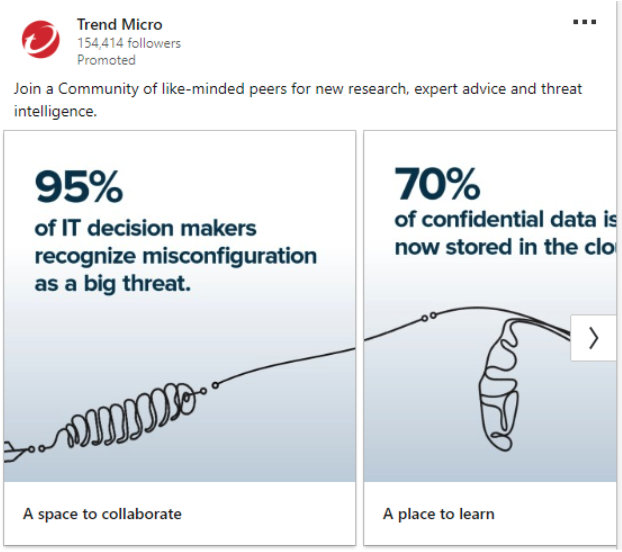
Trend Micro opens strong by leading with numbers—and that’s not an accident. In cybersecurity ads, stats work when they’re specific, credible, and instantly relevant to the buyer. Here, the data pulls the reader in before they even process the brand.
The copy does the rest of the work. It’s concise, value-focused, and written for decision-makers who don’t have time to decode marketing fluff. Pair that with LinkedIn carousel ads, and Trend Micro turns a single insight into a short, connected story that rewards curiosity with clarity.
Why it works:
Clear data, tight copy, and a format that invites interaction instead of demanding it.
RSA: Simple, High-Impact Cybersecurity Ads
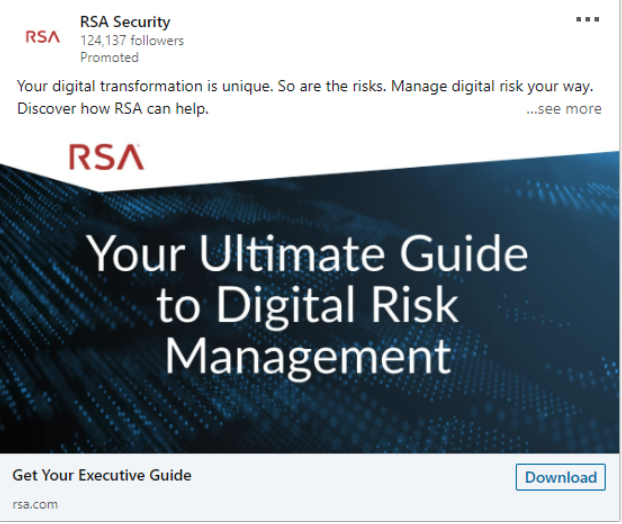
Sometimes simplicity is key! In this ad, the image copy is the hero. A simple design helps the text stand out, and the offer is clearly stated. As part of our paid social campaigns at Yes&, we’ve seen great success offering guides, ebooks, checklists, and other premium content as downloads in mid-funnel campaigns. What would we do differently? Instead of linking to a landing page on the RSA website, use LinkedIn lead generation forms to increase conversion rates by keeping people inside the LinkedIn platform.
Siemplify: Timely, Operator-Focused Cybersecurity Ads
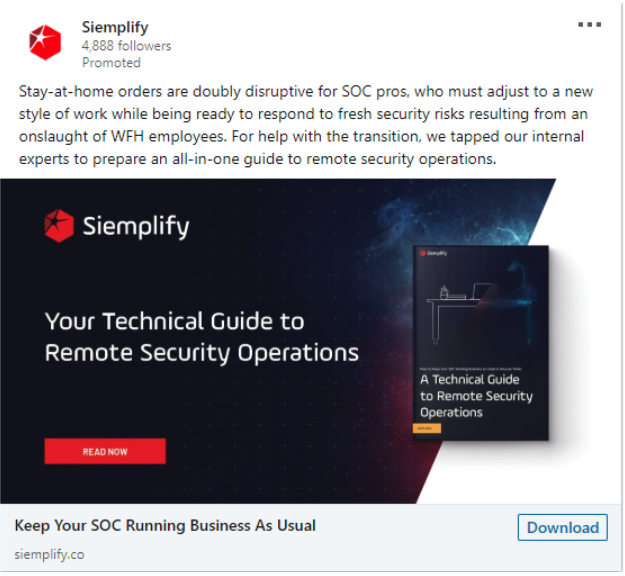
Siemplify did an excellent job of creating a timely, relevant ad for security leaders needing to manage security operations remotely during COVID. It avoids overused phrases like “the new normal,” “we’re here for you,” and “unprecedented times” to instead emphasize key concerns and potential solutions. The offer in this cybersecurity ad is clear, the visual is engaging, and the messaging aligns with what SOC pros are experiencing.
CrowdStrike: Lead Gen–Focused Cybersecurity Advertising

Nice job to CrowdStrike on using LinkedIn lead gen forms for this download! CrowdStrike offers cloud-delivered endpoint protection. This cybersecurity advertisement offers a white paper that highlights their expertise and specific niche while also providing a solution for the viewers to learn more about ransomware. The visual is striking and in line with what is distinctive for their brand.
A-LIGN: Bottom-Funnel Cybersecurity Ads
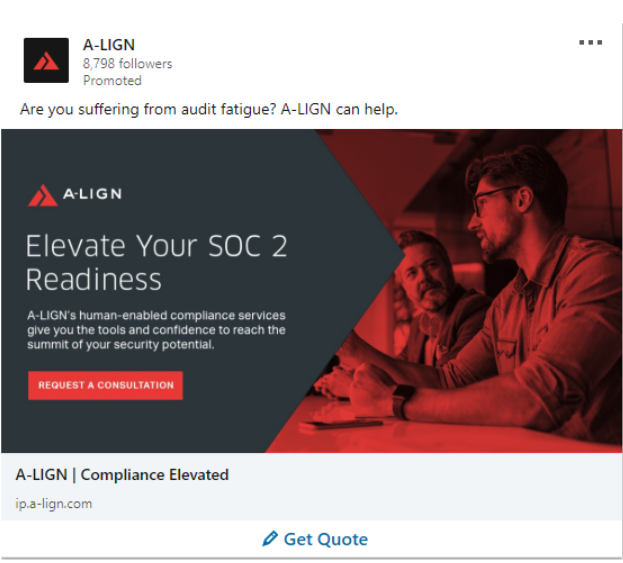
This ad from A-Lign is a good example of a bottom-funnel paid social ad. In a bottom-funnel campaign, the strategy is to remarket to audiences who are already familiar with and have engaged with other content or ads. The goal is to offer a demo, consultation, or sales call specific to the company and services to people who are further down the buyer journey and closer to making a purchase decision.
FireEye: Video-First Cybersecurity Advertising
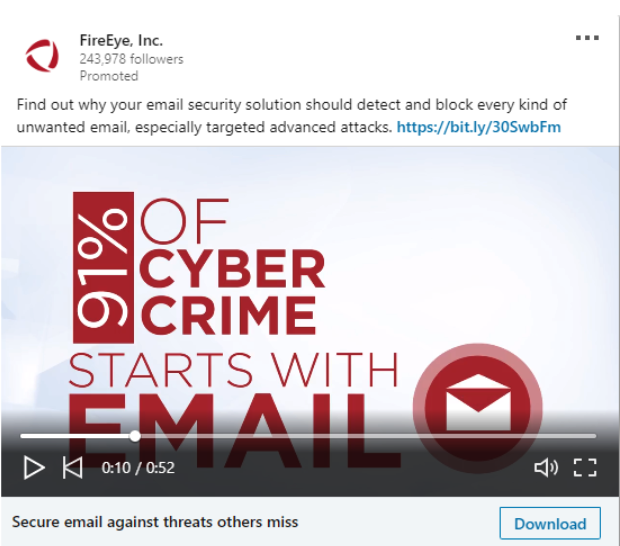
FireEye (now part of Trellix) turned to video to promote their quarterly Email Threat Report. The video shares compelling statistics to engage, set up the problem, and entice viewers to download the report to learn more. 83% of marketers say video has helped them generate leads, according to DemandGen.
Fortinet: Story-Driven Cybersecurity Advertising
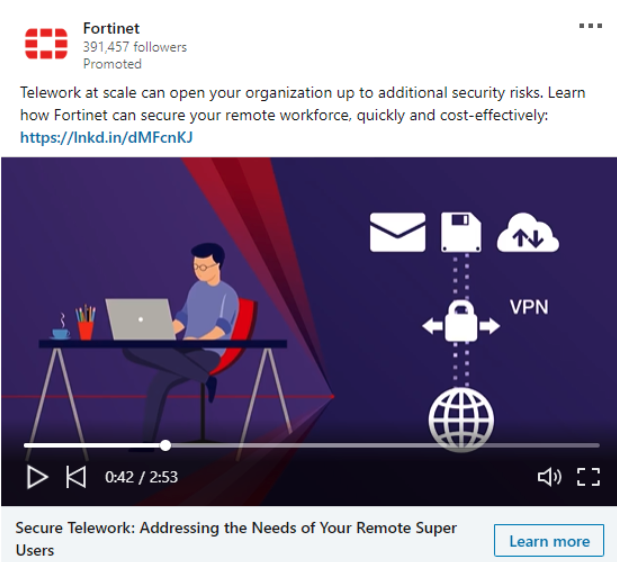
Fortinet provides a mini-case study in video form to explain the additional security risks posed by the increase in remote workers. After addressing a few examples in the video, their cybersecurity ad drives back to a blog on their website so viewers can learn more about the challenges as well as Fortinet solutions.
Palo Alto Networks: Confidence-Led Cybersecurity Ads
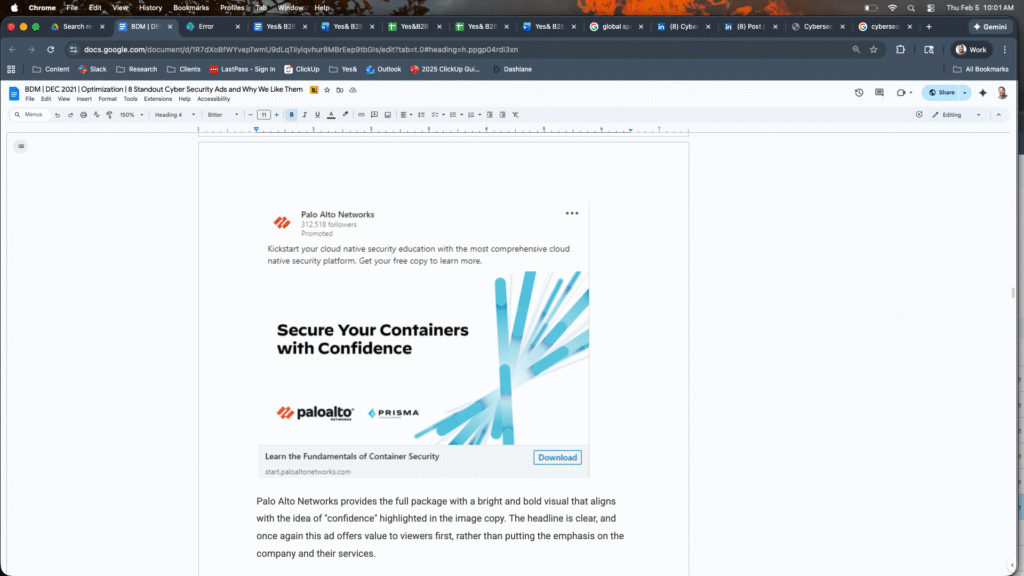
Palo Alto Networks provides the full package with a bright and bold visual that aligns with the idea of “confidence” highlighted in the image copy. The headline is clear, and once again this ad offers value to viewers first, rather than putting the emphasis on the company and their services.
Imperva Incapsula: Smart Targeting in Cybersecurity Advertising
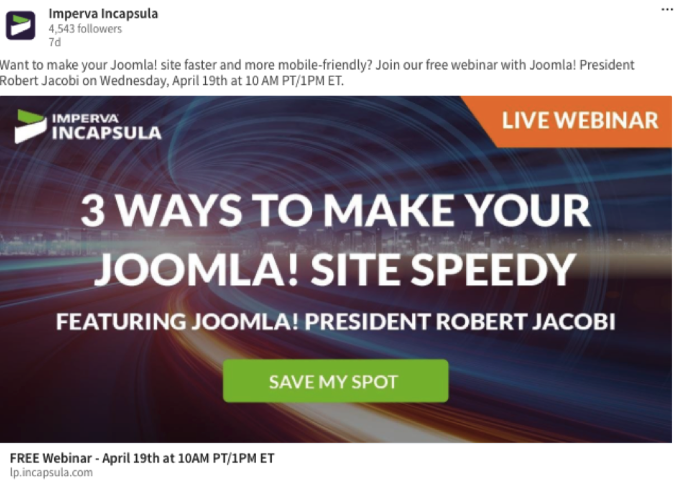
Remember that ads don’t only speak to a prospective audience! Targeting is key. We love that this ad is served to those that already use Joomla!, a content management system, and might want a refresh. Promoting a webinar in partnership with another company is a great way to expand your target audience. Plus, the design makes nice use of contrast. That green button pops, enticing users to click and register. One thing that we would change is to minimize the copy on the image itself to maintain more of a visual hierarchy. At the end of the day, a conversion is your goal so make sure that your CTA has a chance to shine.
Sternum: Straightforward Cybersecurity Ads
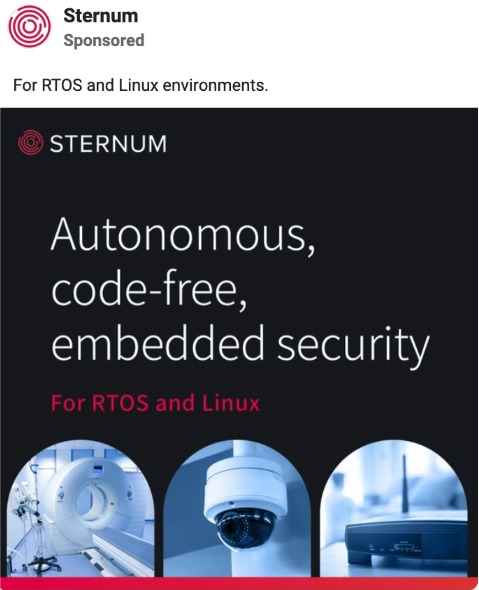
Sternum’s cyber security advertisement is a great example of straightforward messaging. This ad could use a clearer call to action, but for a top-funnel paid social ad, it gives the viewer a good idea of what their company is about.
Dashlane: Humor-Driven Cybersecurity Advertising
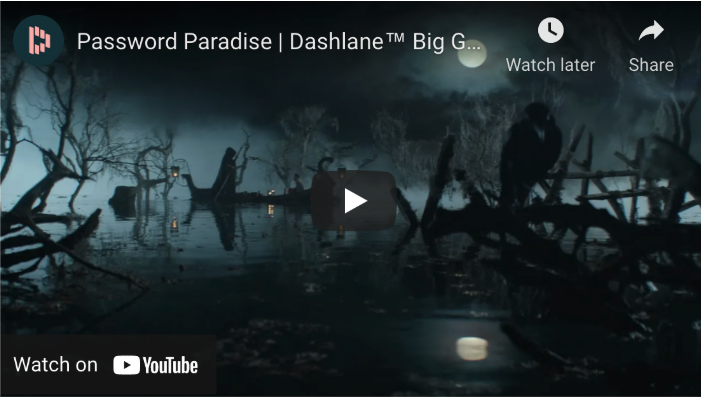
Dashlane takes a risk many cybersecurity brands avoid: it makes people laugh. Their Super Bowl spot taps into a universal frustration (forgetting passwords) and stretches it just far enough to be funny without losing the point.
The ad works because the humor isn’t the punchline; it’s the hook. By exaggerating a familiar pain, Dashlane earns attention first, then quietly reinforces why password management matters. The brand never needs to explain itself. The audience gets it.
For a category that often leans on fear, this cybersecurity ad proves there’s another way to break through—one that feels human and sticks long after the ad ends.
Why it works: Relatable tension, confident restraint, and humor that supports the message instead of distracting from it.
Proofpoint: Authority Through Data
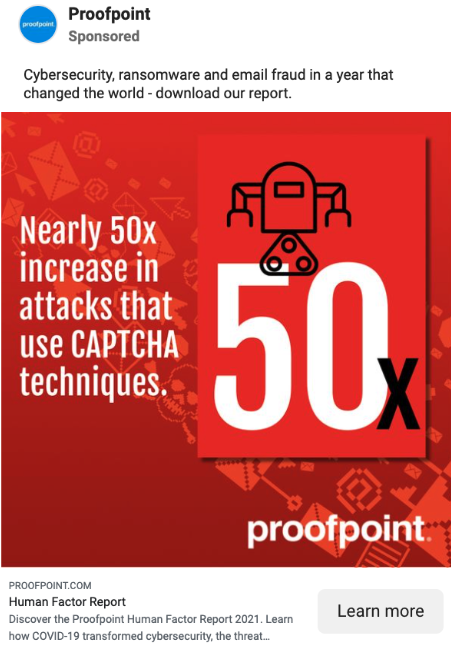
This is another great example of strong data doing the talking. The use of bold color and text was an excellent choice on Proofpoint’s part. With such a large figure at the forefront, this cyber security advertisement engages viewers to read on. They’re pushing viewers directly to their website for downloadable content in the paid social ad.
StandardUser Cyber Security: Personality in Cybersecurity Ads
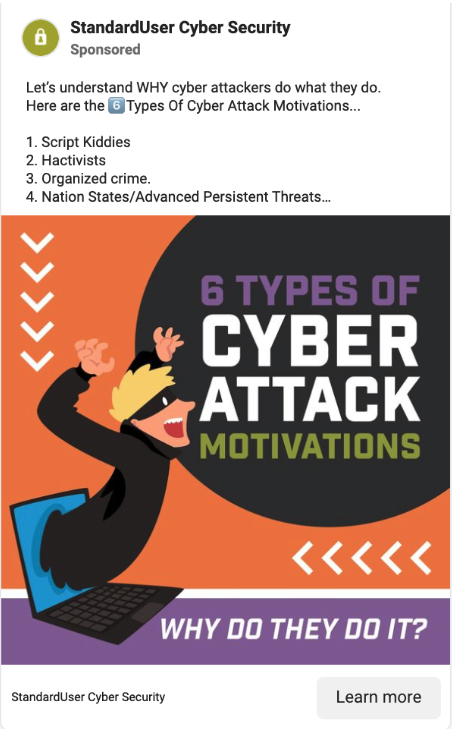
Unlike previous ads, StandardUser Cybersecurity gives the viewer more to read within the primary text of their ad. This strategy gives the viewer enough context to stay interested, but not too much that they feel they don’t need to click-through. Their use of bold imagery and colors is fun, too. While this approach wouldn’t work for all brands, it could definitely catch the eye of their target audience.
Untangle: Brand Clarity in Cybersecurity Advertising
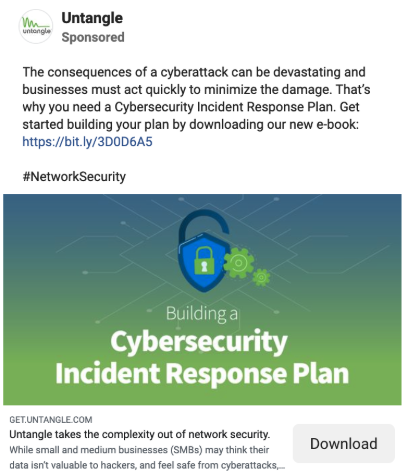
This cyber security advertisement is clean and striking. The usage of brand colors shine through. Untangle’s messaging positions them as an expert on building a maintainable network security plan.
Darktrace: Timeliness as a Creative Hook
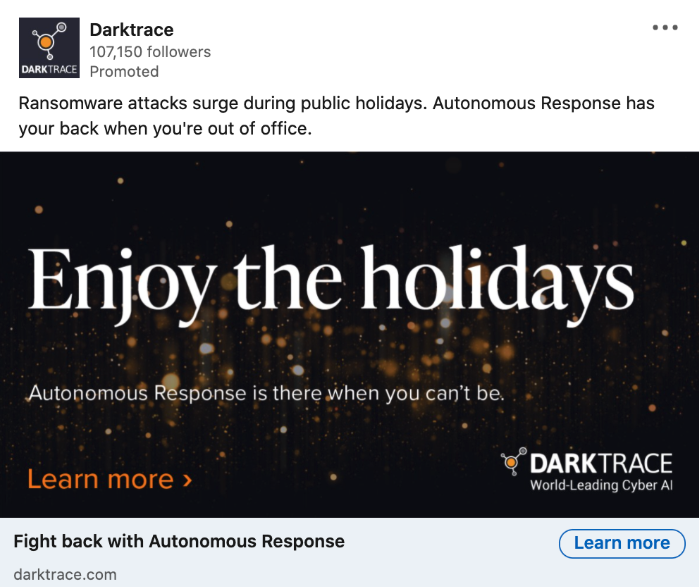
This ad from Darktrace does something new: It plays directly on the timeliness and relevance of the ad. By triggering an ad with messaging surrounding a time of year where stress about keeping up with cybersecurity best practices may not be a top priority is a bold choice.
EMPIST: Motion-Enhanced Cybersecurity Ads
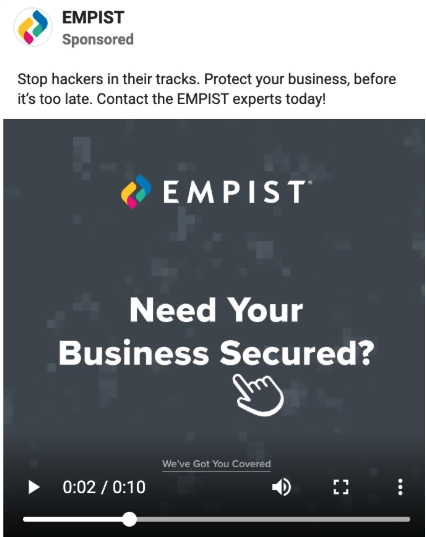
EMPIST uses video in a less traditional way in this ad. The 10-second clip simply animates their graphic in a way that is slick and inviting to the viewer. By posing this simple question within their graphic, in coordination with the urgency found in their primary text, EMPIST is urging their audience to reach out.
ZeroWall.ai: Outcome-Focused Cybersecurity Advertising

ZeroWall.ai also puts the value of their ad onto their viewers, rather than their company. These stark colors and clear graphics make for an eye-catching ad. Driving the ad to the native website rather than a third-party piece of content. This directs potential customers in the right direction and allows them to explore your services at their own discretion.
Accenture: Campaign Cohesion in Cybersecurity Ads
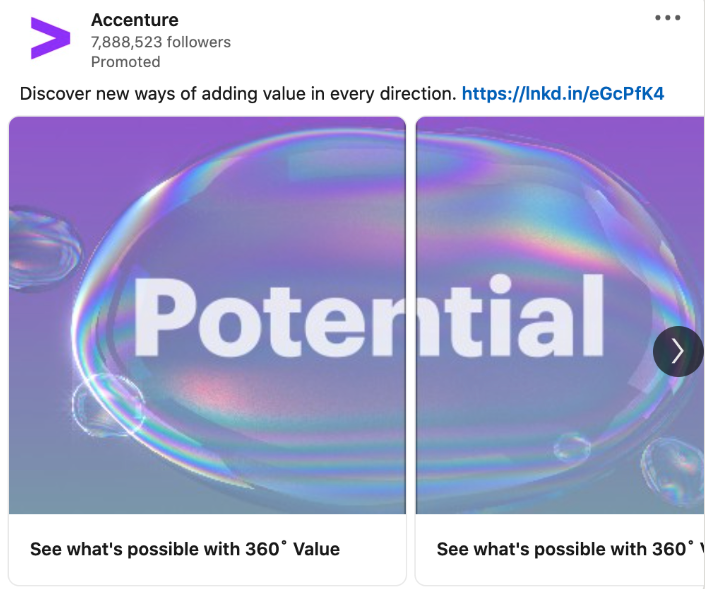
Accenture’s playful LinkedIn ad has consistent campaign messaging throughout. We see the idea of 360° played out within their copy and imagery. Unlike Trendlike’s carousel ad, which highlighted data, this ad uses each panel to expand upon a vibrant and trendy design that we think will draw the viewer’s attention.
CMIT Solutions: Event-Based Cybersecurity Advertising
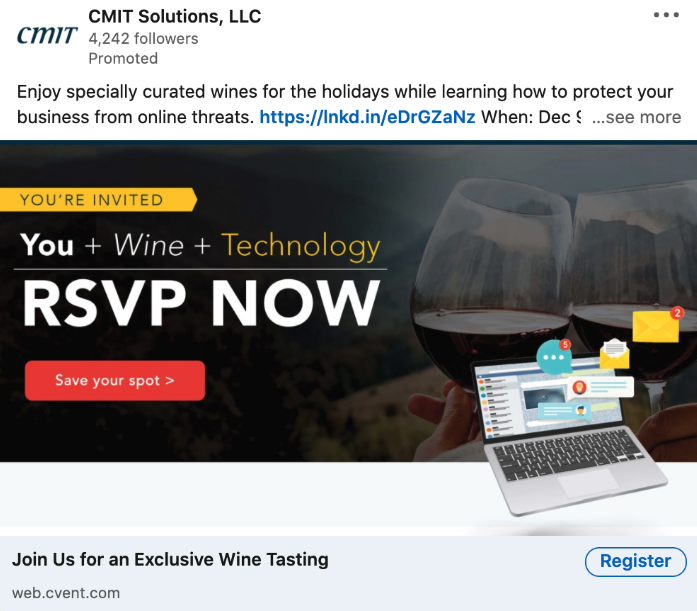
CMIT Solutions’s LinkedIn cyber security advertisement invites business owners to an exclusive event. When targeted correctly, directing viewers right to the registration page is a great move. This ad comes across as approachable and inviting, which is key when considering their audience is not composed of cyber security professionals.
FireEye: Simplified Security Messaging

Pairing the message with the visual design of your ad is an excellent way to get your point across. This ad from FireEye, Inc. is pushing viewers to simplify their security operations using simple copy and clean imagery. Their use of LinkedIn lead gen forms increases conversion rate and makes it simple for their viewers to learn more.
Red Canary: Urgency with Restraint
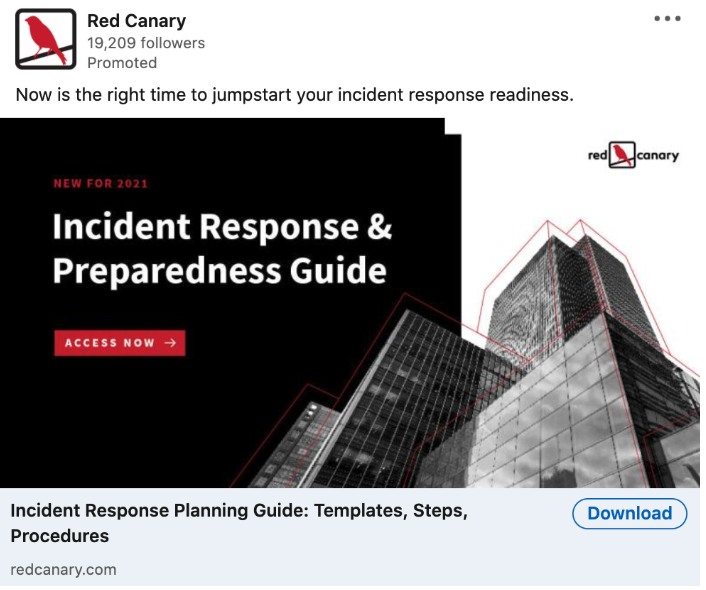
Red Canary’s ad is simple but creates a strong sense of urgency. Though simple, their primary text gets their message across clearly. Plus, we love how the ad feels cohesive with their overall brand.
Cybersecurity marketing campaigns can be highly competitive, but there are ways to rise above the noise with well-designed visuals, smart content offers, and behind-the-scenes strategy and ad management. Our team has worked with dozens of clients selling cybersecurity technology tools and services to do just that!
Editor’s note: This content was first published by Beacon Digital Marketing. Yes& has since updated the article to ensure accuracy, relevance, and clarity.
Ready to Strengthen Your Cybersecurity Brand with Yes&?
You can find out more about our cybersecurity advertisement and marketing services and get in touch with us here.
Frequently Asked Questions
Cybersecurity marketing success is best measured by engagement quality and pipeline impact, not just clicks.
Look at metrics like content downloads, demo requests, webinar attendance, email engagement, and sales-qualified leads. Over time, track deal influence and pipeline velocity to understand which ads drive real buying behavior—not just traffic.
Effective cybersecurity advertising acknowledges risk without overwhelming the audience.
Start by clearly naming the threat in plain language, then pivot quickly to how your solution reduces impact or complexity. The goal is confidence, not panic—buyers should feel informed and empowered, not alarmed.
Cybersecurity ads stand out by being specific, relevant, and immediately useful.
Focus on one clear problem, one strong insight, and one next step. Ads that lead with data, real scenarios, or sharp creative ideas outperform generic claims about “comprehensive protection” or “end-to-end security.”
Yes—when used intentionally, humor can make cybersecurity ads more memorable and approachable.
The key is restraint. Humor should highlight a familiar pain point or behavior without minimizing the seriousness of security risks. When done well, it builds trust and cuts through sameness in the category.
Cybersecurity marketing should adapt its message depth based on the audience.
Technical buyers want proof: architecture, performance data, and real-world validation. Business leaders want clarity: risk reduction, operational impact, and business outcomes. The core message stays the same, just the framing changes.
The most effective cybersecurity ads match format to intent.
Top-funnel campaigns often perform well with short video, bold visuals, or carousel ads that educate quickly. Mid- and bottom-funnel campaigns benefit from lead gen ads, gated content, and clear conversion paths that reduce friction.
Cybersecurity ads should be refreshed every 6–12 weeks, depending on performance and audience saturation.
If engagement drops, creative fatigue is likely setting in. Refreshing visuals, headlines, or offers, without changing the core message, can restore performance while maintaining consistency.